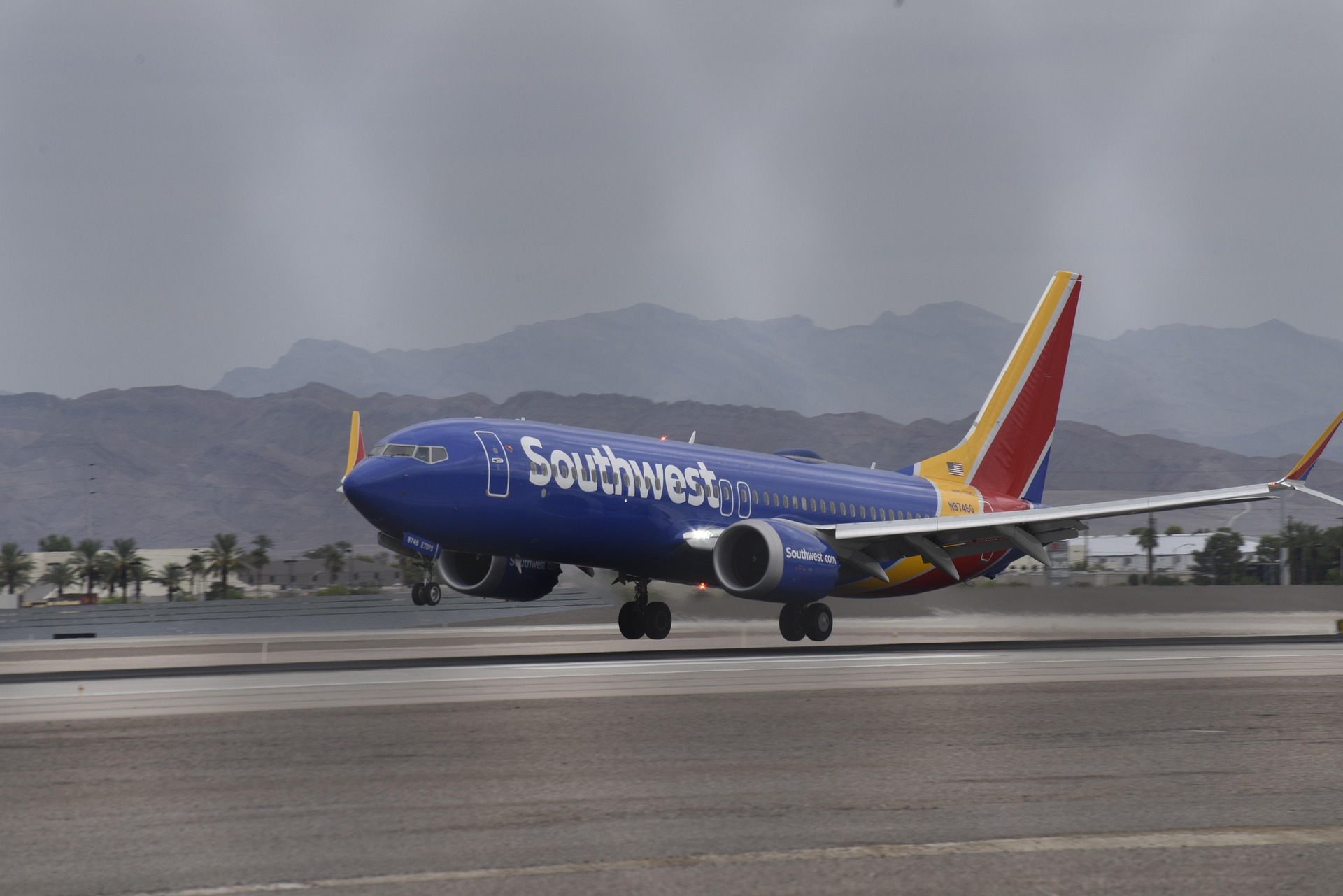
Overview
Southwest Airlines (IATA: WN) is the largest low-cost carrier in the United States and one of the most iconic airlines in the world. Known for its friendly help, low fares, free checked bags, and unique boarding system, Southwest has created a loyal customer base and a culture-driven brand unlike any other U.S. airline.
Founded in Dallas, Texas, Southwest operates a point-to-point network instead of the traditional hub-and-spoke model, allowing it to offer frequent flights, fast turnarounds, and consistently affordable prices.
History & Milestones
Southwest’s story is a classic example of innovation and disruption in the airline industry.
1967–1971: The Beginning
- Founded as Air Southwest Co. by Rollin King and Herb Kelleher.
- Designed to fly only within Texas to avoid federal regulation.
- 1971: Began operations as Southwest Airlines, focusing on intra-state flights between Dallas, Houston, and San Antonio.
1970s–1980s: Growth & Unique Culture
- Built a reputation for friendly staff, humorous crew, and fast, efficient operations.
- Adopted a low-cost model that minimized expenses, reduced fare prices, and increased customer loyalty.
- Introduced the famous “Bags Fly Free” and “No Change Fees” policies which later became core selling points.
1990s: Expansion Beyond Texas
- Expanded across the United States, adding major city-to-city routes.
- Became known for rapid gate turnarounds and operational excellence.
- Introduced the first versions of its open-seating boarding method.
2000s–Present: A Modern Low-Cost Giant
- Became one of the biggest domestic carriers in the U.S. by passenger volume.
- Acquired AirTran Airways in 2011, boosting presence in Atlanta and opening international routes.
- Continues with its all-Boeing 737 fleet strategy, simplifying training and maintenance.
- Remains the most successful and stable low-cost carrier in U.S. aviation history.
Network, Hubs & Reach
Southwest Airlines operates differently from legacy carriers.
Point-to-Point Network
Instead of central hubs, Southwest uses high-frequency, direct flights between cities.
This reduces travel time, avoids heavy congestion, and lowers scheduling delays.
Major Focus Cities
While Southwest avoids calling them “hubs,” it has major bases in:
- Dallas Love Field (DAL)
- Denver International Airport (DEN)
- Chicago Midway (MDW)
- Phoenix Sky Harbor (PHX)
- Las Vegas (LAS)
- Baltimore–Washington (BWI)
- Houston Hobby (HOU)
- Orlando (MCO)
- Los Angeles (LAX)
Network Reach
- Serves 100+ destinations in the U.S., Mexico, Central America, and the Caribbean.
- Known for strong domestic connectivity and popular tourist routes.
Business Model & Corporate Stats
Southwest is widely studied for its efficient and customer-friendly business model.
Key Business Characteristics
- Low-cost carrier structure with simplified operations.
- Single aircraft type: Boeing 737 (reduces training, maintenance, and costs).
- Open seating policy — no assigned seats, boarding by groups.
- Bags Fly Free policy (two free checked bags).
- No change fees (passengers pay only fare differences).
Corporate Scale
- Employees: ~66,000+
- Fleet Size: ~800+ Boeing 737 aircraft
- Daily Flights: 4,000+
- One of the most consistently profitable airlines in U.S. aviation history.
Passenger Experience: Services, Classes & Fleet
Cabin Experience
Southwest has a single-class cabin model with no First or Business Class, but offers:
1. Wanna Get Away & Wanna Get Away Plus Fares
- Affordable fares with flexibility.
2. Anytime Fare
- Refundable, includes priority benefits.
3. Business Select Fare
- Priority boarding (A1–A15)
- Free premium drink
- Extra Rapid Rewards points
Boarding Process
Southwest is known for its open seating:
- No assigned seats
- Passengers board in groups A, B, C
- Seats are chosen on board based on availability
This is one of the airline’s most defining features.
In-Flight Experience
- Single cabin with comfortable leather seats
- Free inflight entertainment via Wi-Fi portal
- Complimentary snacks and soft drinks
- Friendly and humorous crew known for personality-driven help
Fleet
Southwest operates the world’s largest fleet of Boeing 737s, including:
- Boeing 737-700
- Boeing 737-800
- Boeing 737 MAX 8
This fleet strategy improves reliability and efficiency.
What Sets Southwest Apart
1. Two Free Checked Bags
A huge benefit not offered by most competitors.
2. No Change Fees
Travel plans can be adjusted without penalties.
3. Unique Open Seating Model
Fast boarding and a casual, friendly atmosphere.
4. Point-to-Point Efficiency
Less congestion and faster travel times compared to hub-based airlines.
5. Culture-Driven Service
Employees are known for approachability, humor, and customer-first attitudes.
6. Transparent Pricing
No hidden bag fees, seat fees, or cancellation penalties.
Challenges & External Pressures
1. Weather & Operational Sensitivity
Point-to-point systems can face cascading delays during storms or disruptions.
2. All-Boeing Strategy
Relying on one aircraft type means any Boeing-related crisis (e.g., 737 MAX grounding) affects the entire airline.
3. Increasing Competition
Both low-cost and legacy carriers are competing aggressively for domestic market share.
4. Technological Modernization
Southwest has faced criticism during system outages and is investing in technology upgrades.
Practical Advice for Travelers
- Check in exactly 24 hours before departure to secure a better boarding position.
- Consider EarlyBird Check-In for automatic boarding assignment.
- Use Rapid Rewards for flexible award travel with no blackout dates.
- Arrive early for popular routes, especially during holidays.
- If you want the best seats, aim for Group A boarding or Business Select fares.