Overview
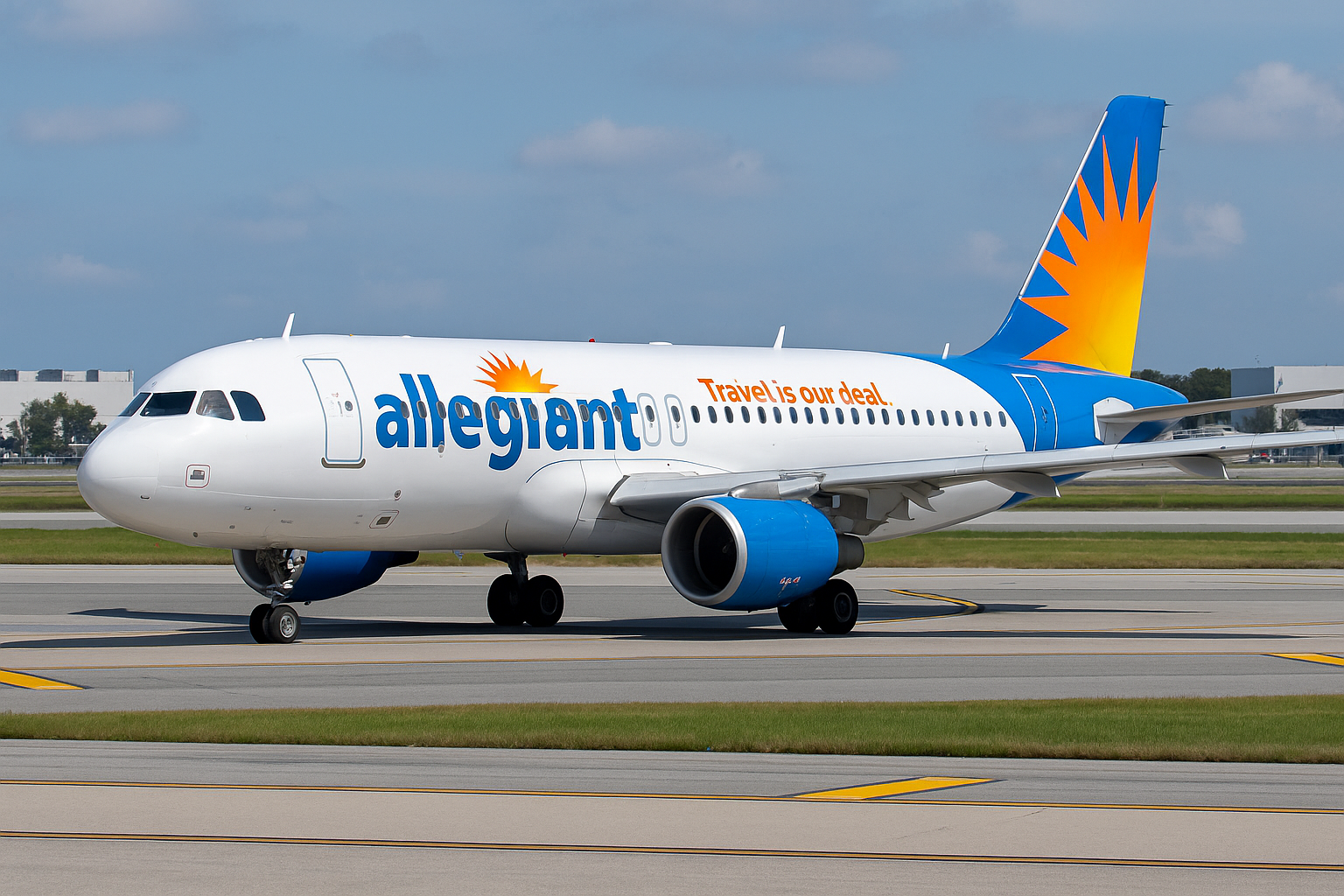
Allegiant Air (IATA code: G4) is a low-cost U.S.-based airline headquartered in Las Vegas, Nevada. Founded in 1997, Allegiant focuses on providing affordable, leisure-oriented flights from smaller U.S. cities to popular vacation destinations.
Unlike legacy carriers, Allegiant operates a “scheduled charter” model, flying to destinations often underserved by major airlines. Its business model emphasizes low fares, optional add-on helps, and a no-frills travel experience.
History & Milestones
Allegiant’s history demonstrates its niche strategy and steady growth.
- 1997: Founding — Allegiant Air was founded as WestJet Express (not affiliated with Canadian WestJet), providing charter flights to leisure destinations.
- 2000s: Rapid expansion — Adopted low-cost model targeting secondary airports and smaller communities. Began scheduled flights connecting underserved cities to major vacation spots.
- 2010: Fleet modernization — Began updating its fleet with Airbus A319 and A320 aircraft to support national expansion.
- 2015–Present: Growth & focus on leisure markets — Allegiant refined its ultra-low-cost strategy, targeting destinations like Florida, Las Vegas, and Phoenix, connecting vacationers from smaller U.S. cities.
Network, Hubs & Global Reach
Allegiant focuses primarily on domestic leisure destinations, rather than a large national or international network.
Hubs & Focus Cities
- Las Vegas McCarran International Airport (LAS) — headquarters and primary focus city.
- Orlando Sanford International Airport (SFB) — major leisure destination hub.
- St. Petersburg-Clearwater International Airport (PIE) — Florida focus city for leisure travelers.
- Smaller secondary airports across the U.S. — Allegiant primarily serves cities that are underserved by larger carriers.
Destinations
- Serves over 125 destinations in the United States.
- Focuses on connecting smaller markets to popular vacation destinations such as Florida, Arizona, Nevada, and other leisure hotspots.
- Allegiant’s network avoids large legacy hubs, instead emphasizing convenience for travelers in smaller cities.
Business Model & Corporate Stats
Allegiant’s low-cost strategy differentiates it from legacy carriers.
- Fleet: Operates primarily Airbus A319 and A320 aircraft; smaller fleet sizes keep operating costs low.
- Employees: Approximately 8,000 staff (as of 2024), reflecting lean operations compared to larger U.S. airlines.
- Flight Operations: Emphasizes point-to-point travel with fewer connections to minimize turnaround times and maximize efficiency.
- Revenue Model: Relies on low base fares with add-on fees for seat selection, baggage, and other helps — typical of ultra-low-cost carriers.
Passenger Experience: Services, Classes & Fleet
Allegiant provides a no-frills travel experience, with optional upgrades for travelers who want extra comfort or convenience.
Cabin & Service Options
- Economy Class Only — standard seating with optional add-ons such as priority boarding, extra legroom seats, and in-flight refreshments.
- Optional Add-Ons — passengers can purchase seat selection, carry-on or checked baggage, and other premium helps for a fee.
- No Premium Cabins — consistent with the ultra-low-cost model, Allegiant focuses on keeping base fares low.
Fleet
- Airbus A319 & A320 — all narrow-body aircraft configured for short-to-medium-haul routes.
- Focus on efficiency and low operating costs rather than luxury or long-haul comfort.
What Sets Allegiant Apart: Strengths & Strategic Advantages
- Low-Cost, Leisure-Oriented Model — targets cost-conscious travelers seeking vacations rather than business travel.
- Secondary Airports — avoids congested legacy hubs, allowing faster boarding, fewer delays, and convenient access for small-city residents.
- Point-to-Point Service — efficient operations minimize layovers and reduce travel time for direct routes.
- Optional Add-Ons — passengers only pay for what they need, keeping base fares low.
- Flexible Scheduling — seasonal and leisure-focused flight schedules allow demand-driven operations.
Challenges & External Pressures
- Competition from Low-Cost Carriers — faces rivalry from Spirit, Frontier, and Southwest on select routes.
- Limited Global Reach — primarily domestic U.S. flights; international options are minimal.
- Dependence on Leisure Travel — highly sensitive to seasonal demand and tourism fluctuations.
- Operational Risks — smaller fleet and single-aisle aircraft limit flexibility compared to larger carriers.
- Fee Model Risks — optional add-on revenue depends on passengers’ willingness to pay, which may fluctuate.
Practical Advice: What Travelers Should Know When Flying Allegiant
- Expect Low Base Fares with Add-On Costs — plan ahead for baggage, seat selection, and other optional fees.
- Secondary Airports — check the airport location; they may be farther from city centers but are usually quicker and less crowded.
- Limited Connectivity — Allegiant focuses on direct point-to-point travel; connecting flights through Allegiant are rare.
- Book Early for Seasonal Trips — leisure destinations can fill quickly during holidays and vacation periods.
- Travel Insurance — optional, but often recommended due to low-cost, non-refundable fare structures.