Overview
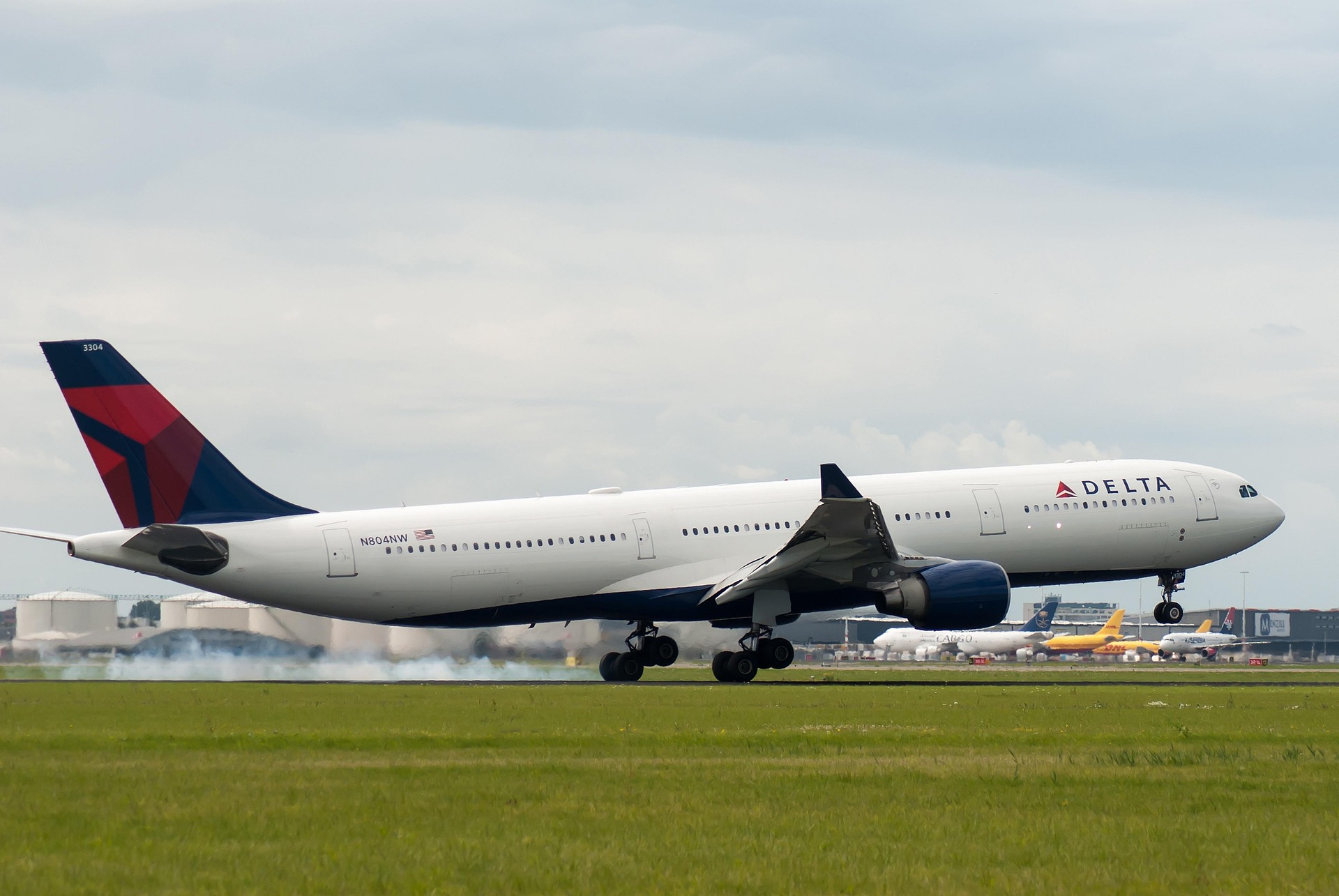
Delta Air Lines (IATA: DL), commonly called simply “Delta,” is one of the most influential and largest legacy carriers in the world. Headquartered in Atlanta, Georgia, Delta has evolved from a crop-dusting company into a global aviation leader with extensive domestic reach and an impressive international footprint.
Today, Delta operates thousands of flights daily to 300+ destinations across six continents, serving millions each year with a mix of modern aircraft, premium helps, global partnerships, and industry-leading operational reliability. Known for strong customer satisfaction metrics, a powerful hub system, and a forward-looking fleet strategy, Delta is among the most respected airlines globally.
History & Milestones
Delta’s long history reflects innovation, mergers, and major leaps in commercial aviation.
1920s–1930s: Delta’s Beginnings
- Founded in 1925 as Huff Daland Dusters, Delta began as an agricultural crop-dusting operation.
- In 1928, C.E. Woolman led the acquisition of the company and renamed it Delta Air Service, inspired by the Mississippi Delta region.
- Delta launched passenger flights in 1929, connecting Dallas, Texas with Jackson, Mississippi — marking its entry into commercial aviation.
1940s–1960s: Establishing a Major U.S. Carrier
- By 1934, Delta secured an airmail contract and renamed itself Delta Air Lines, positioning itself for nationwide growth.
- The 1940s and 50s saw rapid expansion, including its first international helps to the Caribbean.
- Delta joined the jet age early, introducing the Douglas DC-8 and Convair 880 during the 1960s, which led to new coast-to-coast and international routes.
1970s–1990s: Expanding with Mergers & New Routes
- Delta expanded its network through the acquisition of Northeast Airlines in 1972.
- By the 1990s, Delta became one of the first major airlines to introduce global alliances and codeshare partnerships.
- With Atlanta emerging as a massive transportation hub, Delta built one of the world’s most powerful domestic and international connecting systems.
2008: Merger with Northwest Airlines
- In 2008, Delta merged with Northwest Airlines, creating the world’s largest airline at the time.
- The merger expanded Delta’s transpacific presence, enhanced its global partnerships, and strengthened its fleet and financial base.
2010s–Present: Modernization & Premium Strategy
- Delta invested heavily in aircraft modernization, ordering Airbus A350s, A330neos, A321neos, and updating interiors across its fleet.
- The airline redesigned its premium experience, introducing:
- Delta One® Suites
- Delta Premium Select
- Delta Comfort+®
- Delta strengthened its digital systems, customer experience tools, SkyMiles loyalty program, and environmental initiatives.
Network, Hubs & Global Reach
Delta’s vast and highly efficient network is one of its greatest strategic advantages.
Major U.S. Hubs
Delta operates key hubs across major U.S. airports:
- Hartsfield–Jackson Atlanta International Airport (ATL)
- Delta’s largest hub and one of the busiest airports in the world.
- Detroit Metropolitan Airport (DTW)
- Midwest hub with significant domestic and Canada connectivity.
- Minneapolis–Saint Paul International Airport (MSP)
- Former Northwest hub, strong for domestic and transpacific routes.
- Salt Lake City International Airport (SLC)
- Western U.S. hub with strong Rocky Mountain region access.
- Los Angeles International Airport (LAX)
- Gateway for transpacific and Latin American markets.
- New York – JFK & LGA
- Delta’s major Northeast hubs with strong domestic, Europe, and international access.
- Seattle–Tacoma International Airport (SEA)
- Partner hub supporting joint ventures with Korean Air.
Global Reach
- Delta serves 300+ destinations in more than 50 countries.
- It is one of the leading transatlantic and transpacific carriers.
- Through SkyTeam Alliance and deep joint ventures with:
- Air France–KLM
- Virgin Atlantic
- Korean Air
- LATAM Airlines (strategic partnership)
Delta provides seamless global coverage for international travelers.
Business Model & Corporate Stats
Delta’s business strategy blends the advantages of a legacy carrier with modern efficiency and strong brand positioning.
Core Corporate Highlights
- Employees: 90,000–100,000 globally
- Fleet size: Nearly 1,000 aircraft, one of the largest in the world
- Daily flights: More than 4,000 flights each day
- Business segments:
- Passenger travel
- Cargo
- Maintenance & engineering helps (Delta TechOps)
- SkyMiles loyalty program
- Global alliances and joint ventures
Strategic Initiatives
Delta focuses on:
- Fleet modernization (A350, A330neo, A321neo)
- Premium cabin differentiation (Delta One Suites)
- Technological advancement, including app improvements and biometric boarding
- Sustainability with major carbon reduction initiatives
- Expanding transatlantic and transpacific networks
Passenger Experience: Services, Classes & Fleet
Delta is known for strong customer satisfaction scores due to its consistent onboard and ground help quality.
Cabin Classes
Delta offers multiple cabin classes designed for a range of traveler needs:
- Delta One® / Delta One® Suites
- Lie-flat beds, premium dining, privacy doors, upscale lounges.
- Delta Premium Select
- Premium economy cabin with wider seats, enhanced dining, and priority helps.
- Delta Comfort+®
- Extra legroom, early boarding, preferred overhead bin space.
- Main Cabin Economy
- Standard economy with complimentary snacks, entertainment, and Wi-Fi options.
- Basic Economy
- Low-fare option with limited flexibility and seating restrictions.
Fleet & Modern Aircraft
Delta operates a mixed Boeing and Airbus fleet including:
- Airbus A350-900
- Airbus A330-900neo
- Airbus A321 & A321neo
- Airbus A220–100/300
- Boeing 767-300/400
- Boeing 757–200/300
- Boeing 737–800/900
Fleet Strategy Highlights
- Delta is retiring older models and replacing them with fuel-efficient new-generation aircraft.
- The A350 and A330neo serve flagship long-haul routes with advanced comfort and lower fuel burn.
- Upgrades include high-speed Wi-Fi, redesigned cabins, larger entertainment screens, and modern LED lighting.
What Sets Delta Apart: Strengths & Strategic Advantages
Delta’s competitive strengths make it stand out among other U.S. and global carriers.
1. Industry-Leading Reliability
Delta has consistently ranked near the top among U.S. carriers for:
- On-time performance
- Operational efficiency
- Low cancellation rates
2. Strong Alliance & Partnerships
SkyTeam and joint ventures enable travelers to seamlessly access Europe, Asia, Africa, and South America.
3. Premium Travel Experience
Delta’s cabin designs and airport lounges—especially Delta One Lounges—rank highly among U.S. airlines.
4. Modern Fleet & Sustainable Practices
Constant fleet renewal helps reduce emissions, cut fuel costs, and improve passenger comfort.
5. Global Network Reach
Delta’s hubs ensure reliable domestic coverage while offering strong transatlantic and transpacific options.
Challenges & External Pressures
Despite its strengths, Delta faces multiple industry-wide challenges.
Environmental & Regulatory Requirements
- Sustainability expectations are rising, requiring continued investment in greener aircraft and biofuels.
- Long-term commitments include net-zero emissions goals and fuel efficiency improvements.
Market Competition
Delta competes closely with:
- American Airlines
- United Airlines
- International carriers (British Airways, Air France, KLM, Lufthansa, Qatar Airways, Emirates)
Balancing fare competitiveness and premium help requires constant strategic adaptation.
Operational and Cost Pressures
- Fuel price volatility
- Labor agreements and staffing demands
- Global economic fluctuations
- Weather disruptions impacting major hubs (particularly ATL, NYC)
Practical Advice: What Travelers Should Know When Flying Delta
Here are useful insights for passengers choosing Delta:
- Choose Delta One® for long-haul luxury
It offers one of the most comfortable business-class products among U.S. airlines. - Leverage SkyMiles & SkyTeam
Loyalty members enjoy excellent global reach and redemption flexibility. - Pick Comfort+® for domestic comfort
Affordable legroom upgrades make long domestic flights easier. - Check aircraft type for international travel
A350 and A330neo planes provide the best experience with modern interiors. - Use the Delta mobile app
It provides seamless check-in, bag tracking, same-day changes, and rebooking tools.